
When Runway Meets Reel: Nollywood + Fashion Are Finally Getting Fluent
- FSA Team
- Dec 1, 2025
- 2 min read
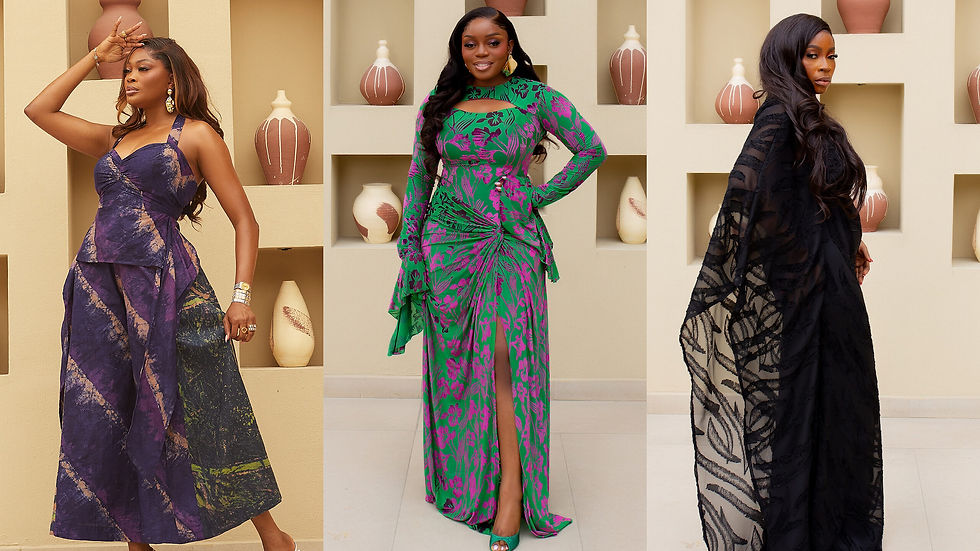
Recently, Lagos-born fashion label Zephans & Co. made history — becoming the first Nigerian fashion brand to co-sponsor a Nollywood film, the high-octane heist movie Gingerrr. That’s not a collateral product placement or backstage wardrobe hand-off. It’s a full-on collaboration: clothes, brand identity, creative vision, and marketing all stitched into the cinematic fabric.
For founder and creative director Nkiru Achukwu, it was a deliberate statement:
“Gingerrr celebrates bold Nigerian women; dressing that story feels like a full-circle Lagos love letter.”
It’s a smart move — fashion gets access to Nollywood’s millions, while the film gains authentic style rooted in Lagos streets, not global generic glam.
Why the Fusion Works (And Why It Matters)
Visual Storytelling: Costumes as Character Language
Costume design in African film is more than wardrobe — it defines identity. As one industry costume designer put it, a character’s clothes must match their personality, their background, even their emotional arc.
When a brand like Zephans & Co. dresses characters in a film, it’s not just fashion — it’s world-building. Fabrics, cuts, prints speak volumes about who the character is, or what they’re trying to be.
Fashion + Film = Cultural Amplifier
African cinema has long used traditional fabrics and silhouette languages — Ankara prints, head wraps, beadwork — but pairing them with modern design sensibilities creates a hybrid that resonates globally. The trend has been growing, but the Zephans collaboration marks a shift from incidental styling to strategic design-filmmaking partnership.
A Win for Creatives & Industry Infrastructure
Partnerships like this strengthen the ecosystem. Designers get visibility beyond runways, filmmakers get polished styling, and audiences get more believable, aspirational, or relatable visuals. Importantly, this fusion helps fashion become part of the cinematic economy — not just in credits, but in budgeting, sponsorships, and distribution.
But This Is Bigger Than Glamour
The Zephans–Nollywood moment isn’t only about clothes or aesthetics. It speaks to a deeper transformation in how stories are told — especially African stories.
For too long, African film has been underfunded, under-styled, and under-globalised. Collaborations like this help push production quality forward.
It’s a reclamation of who gets to design African style. Rather than outsourced costume houses or stereotyped “ethnic chic,” local designers with cultural roots get to shape how African cities, lives, and identities are depicted on screen.
It helps normalize film costumes as legitimate fashion — not just for characters, but for everyday fans watching on and off screen.
As Nollywood stars walk red carpets or fans re-create looks from onscreen outfits, the line between “movie costume” and “personal style” begins to blur — and that’s powerful.


Comments